
The global fashion marketplace is vast, fast-moving, and hyper-competitive. While fast-fashion companies rely on high volume, rapid copycat designs, and deep price discounts to survive, luxury heritage houses operate on a completely opposite business model. High-end fashion houses do not seek to appeal to everyone. Instead, they cultivate an aura of elitism, historical significance, and superior quality that allows them to sell products at astronomical price points.
Maintaining this prestige over decades, or even centuries, is not an accident of history. It requires a meticulous, deeply calculated corporate strategy. Luxury brands must carefully manage their production volumes, control their distribution channels, preserve traditional artisan skills, and leverage psychological triggers that transform a physical item into a powerful status symbol.
The Strategic Illusion of Artificial Scarcity
The fundamental law of mass-market economics dictates that when demand for a product increases, a company should increase production to maximize revenue. Luxury fashion brands openly reject this rule. They understand that total availability is the absolute death of luxury. If a product becomes too easy to buy or too common to see on the street, it loses its social signaling power.
To prevent this saturation, luxury houses utilize artificial scarcity. They intentionally produce far fewer items than the market demands. This creates lengthy waiting lists for iconic products, sometimes spanning months or years. By strictly limiting supply, the brand ensures its goods remain highly coveted treasures rather than easily accessible commodities. The difficulty of acquiring the item becomes a core component of its value, transforming the purchasing process into an exclusive achievement.
Vertical Integration and Absolute Control Over Distribution
A premium image cannot survive in an uncurated retail environment. Luxury fashion brands protect their prestige by exercising total control over how, where, and to whom their products are sold. This is accomplished through strict vertical integration and the systematic elimination of third-party wholesalers.
The Flagship Store Experience
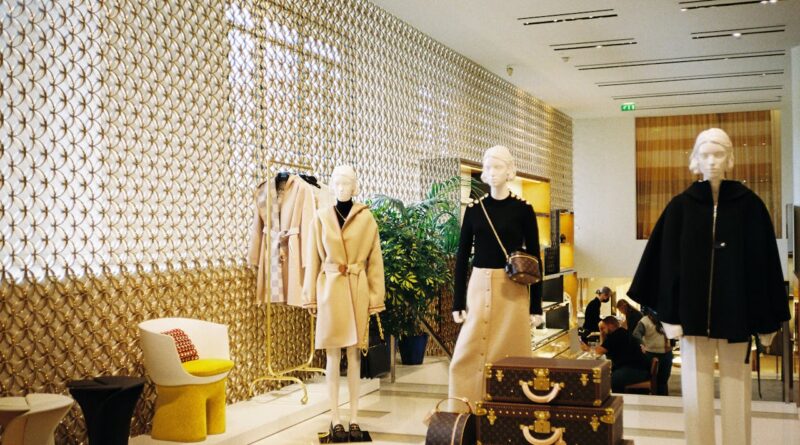
Luxury houses invest billions of dollars in their physical flagship boutiques, treating them more like contemporary art museums or historical landmarks than standard retail shops. These spaces are strategically located in the world’s most affluent shopping districts, such as Fifth Avenue in New York, the Champs-Elysees in Paris, or Bond Street in London. Every detail within the boutique is hyper-managed:
-
Custom architectural designs crafted by world-renowned architects to reflect the brand’s aesthetic heritage.
-
Ultra-low product density, where a massive room might display only a handful of handbags or garments, mimicking an art gallery.
-
Highly trained personal client advisors who provide highly personalized, one-on-one attention to each visitor.
-
Private, hidden VIP lounges reserved exclusively for high-net-worth individuals to shop away from the public eye.
Strict E-Commerce Guardrails
While mass-market brands embrace third-party online marketplaces to drive sales volume, luxury houses approach digital commerce with immense caution. They carefully avoid discounting strategies, refuse to participate in seasonal site-wide sales, and maintain absolute control over their own digital storefronts. By avoiding multi-brand discount platforms, they prevent their product images from being cheapened by digital clutter or proximity to lower-tier goods.
Intellectual Heritage and the Mythos of Craftsmanship
Mass production relies on automated factory assembly lines to minimize labor costs and maximize speed. Luxury fashion brands build their entire identity on the exact opposite narrative: the timeless dedication of the human hand and inherited artisan expertise.
Luxury houses frequently anchor their marketing narratives in historical storytelling, reminding consumers of their origins as master leather trunk makers, equestrian saddlers, or exclusive haute couture dressmakers for royalty. They heavily emphasize that their products are hand-stitched, hand-painted, or meticulously assembled by highly trained craftsmen in historic European ateliers.
This focus on heritage serves a dual purpose. First, it justifies the premium price tag by framing the purchase as an acquisition of fine art and human dedication rather than a mere consumer good. Second, it creates an emotional connection, convincing the buyer that they are purchasing a piece of living history that can be passed down through generations as an heirloom.
Price Architecture and Veblen Economics
In standard consumer markets, the demand for a product drops as the price goes up. Luxury fashion operates within the realm of Veblen goods, an economic phenomenon where demand actually increases as the price rises. In luxury fashion, a higher price tag directly enhances the perceived exclusivity and desirability of the item.
To maintain prestige, luxury brands implement regular, aggressive price increases across their core product lines. These adjustments often far outpace standard economic inflation. This continuous upward pricing strategy signals to the public that the brand’s value is appreciating over time, reinforcing the idea that purchasing a luxury asset is a sound financial investment.
Furthermore, luxury houses almost never hold public warehouse clearouts, end-of-season sales, or outlet promotions for their flagship items. If excess inventory remains at the end of a seasonal cycle, many houses choose to destroy, recycle, or privately dismantle the surplus goods rather than sell them at a discount, protecting the brand’s pricing integrity at all costs.
Re-Engineering Pop Culture via Strategic Influencer Ecosystems
The modern luxury brand must walk a delicate tightrope: it must remain deeply rooted in historical tradition while simultaneously appearing relevant to younger, culturally influential generations. To achieve this, luxury houses have completely re-engineered their relationship with celebrity culture and public marketing.
Instead of deploying traditional, broad-market television or billboard advertisements, luxury houses focus on high-impact, curated cultural moments. They appoint global brand ambassadors from the highest echelons of film, music, and sports, creating a tight association between the brand and global excellence.
Additionally, they tightly control their presence at high-profile cultural events, such as the Met Gala, international film festivals, and exclusive art exhibitions. By ensuring that only the most celebrated individuals wear their creations at these landmark moments, the brand continually refreshes its status as the definitive wardrobe of the global elite.
FAQ
Why do some luxury fashion brands destroy their unsold inventory instead of donating it?
Luxury fashion brands destroy or securely recycle unsold inventory to protect their brand equity and pricing power. If excess seasonal items were donated, sold to discount outlets, or allowed to flood the secondary market at low prices, the brand’s image of extreme scarcity would be compromised. Destroying the items ensures that the market value of existing customer purchases remains secure and that the products never become widely accessible.
How do luxury brands combat the global counterfeit market without losing their exclusivity?
Luxury houses combat counterfeits through a combination of aggressive legal action, advanced covert technology, and consumer education. Brands embed microchips, unique serial numbers, blockchain-backed digital certificates of authenticity, and proprietary holographic threads inside their items. They also maintain dedicated intellectual property legal teams that work alongside global customs agencies to seize counterfeit shipments and shut down illicit digital operations.
What is the role of a creative director in maintaining a luxury brand’s prestige?
The creative director acts as the artistic custodian of the brand’s visual identity. Their job is to interpret the historic codes, archives, and design heritage of the house and reinvent them for the modern consumer. A successful creative director balances historical reverence with contemporary edge, ensuring the brand stays culturally relevant and exciting to new generations without alienating its traditional, long-term clientele.
How do luxury brands justify their high prices when manufacturing can be done cheaper abroad?
Luxury brands justify their pricing by focusing on the total value ecosystem rather than raw material costs. The price accounts for the preservation of rare, centuries-old artisan techniques, the utilization of top-tier materials, geographic production within historic European regions, extensive research and development, and the immense prestige and social status associated with carrying the brand’s logo.
What is the difference between a premium brand and a true luxury brand?
Premium brands focus on offering high quality, functional superiority, and accessible status at a price point that reflects production value, often scaling production up to meet market demand. True luxury brands focus on absolute exclusivity, historical mythos, emotional resonance, and artificial scarcity. Luxury brands do not try to be reasonable or accessible; they deliberately set barriers to entry to ensure only a select few can participate.
How are luxury brands adapting to modern sustainability demands without losing their opulent appeal?
Luxury houses are redefining opulence through the lens of sustainability by focusing on circularity, longevity, and ethical sourcing. Because luxury items are naturally produced in low quantities and designed to last a lifetime, they are inherently less wasteful than mass-market fashion. Brands are investing heavily in organic agriculture, traceable leather supply chains, lab-certified precious stones, and offering lifetime repair and restoration services for their vintage products.
