
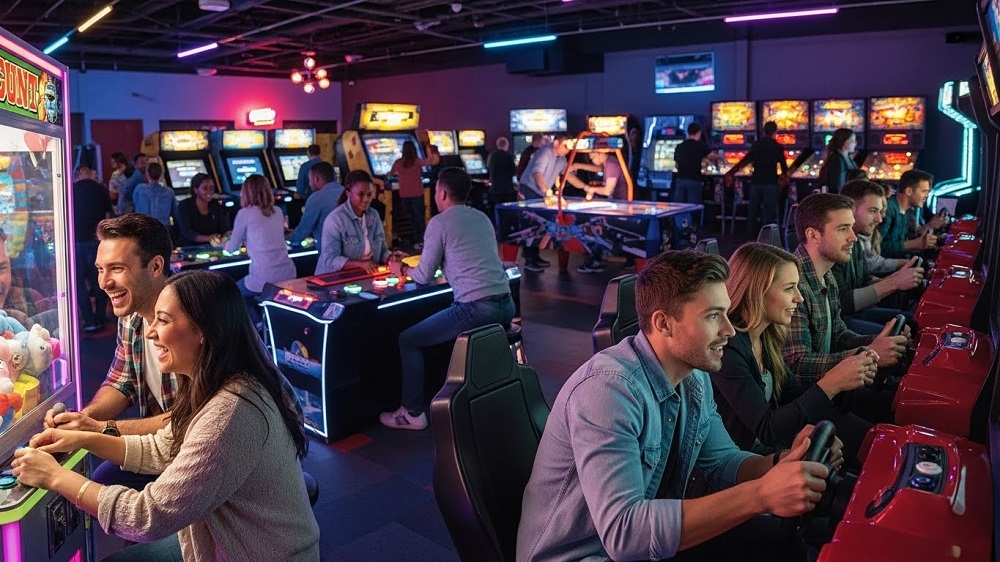
The global entertainment landscape is undergoing a massive convergence. For decades, casino gaming and mainstream video gaming existed in completely separate realms. Casinos focused on chance, physical slot machines, and green-felt table games designed for a specific demographic. Meanwhile, the video game industry thrived on skill, narrative depth, and immersive digital worlds tailored for a tech-savvy generation. Today, those boundaries are fading. Driven by rapid technological evolution and shifting consumer expectations, casino gaming is actively transforming into a highly interactive, skill-influenced ecosystem that mirrors the broader future of digital entertainment.
As modern consumers demand more agency, immersion, and social connection in their digital experiences, traditional gaming operators are forced to innovate. The result is a new era of interactive entertainment where advanced technology, immersive mechanics, and gamification merge to redefine the modern gaming experience.
The Demolition of the Traditional Slot Machine
The classic, mechanical three-reel slot machine was built around a passive user experience. The player pulled a lever or pressed a button, watched the reels spin, and waited for an automated outcome determined entirely by a random number generator. While this format sustained the industry for generations, it no longer satisfies modern audiences raised on interactive media, strategy games, and continuous digital engagement.
To capture the interest of modern players, developers are introducing skill-influenced and hybrid gaming mechanics. These modern setups blend elements of traditional chance with interactive video game features:
-
Skill-Based Bonus Rounds: Instead of passive free spins, modern machines feature interactive bonus rounds where a player’s hand-eye coordination, puzzle-solving abilities, or strategic choices directly influence their financial payout.
-
Progression and Leveling Systems: Borrowing directly from popular role-playing video games, modern platforms save user progress. Players can level up characters, unlock aesthetic upgrades, and discover new maps or story arcs over multiple sessions.
-
Immersive Touch and Gesture Controls: Traditional buttons are giving way to high-definition touch screens, dynamic haptic feedback, and gesture-recognition sensors that allow players to interact with the game world in a highly physical manner.
Immersive Realism Through Live Streaming and Virtual Environments
One of the most notable successes in the modernization of casino entertainment is the rise of live-dealer platforms. This sector bridges the gap between the isolation of standard mobile apps and the lively energy of a physical casino floor.
Through advanced high-definition streaming, professional cameras, and real-time optical character recognition technology, physical cards and roulette wheels are instantly digitized. Players sit at virtual tables, interacting with human dealers and chatting with fellow players from around the world. The experience is highly social and transparent, removing the cold, automated feeling of older digital card games.
Looking slightly further ahead, the integration of spatial computing, virtual reality, and augmented reality represents the next logical frontier. Developers are constructing full-scale digital casino resorts. Using advanced headsets, users can walk through meticulously detailed virtual lobbies, choose a seat at a crowded blackjack table, observe the body language of opponents, and step out onto a virtual balcony to view a simulated cityscape. This technology removes geographical barriers entirely, transforming home entertainment into a deeply social, shared spatial experience.
Convergence with Video Game Streamers and Spectator Culture
The explosion of platforms like Twitch and YouTube Live proved that watching others play video games is a highly lucrative, massive global industry. Casino gaming is quickly integrating into this spectator culture, turning what was once a highly private activity into a collaborative, community-focused form of entertainment.
Modern interactive casino platforms are building native streaming and community features directly into their software architectures. Group play mechanics allow a single influencer or streamer to host a digital table or slot lobby where hundreds of viewers can wager alongside them, pool resources for community bonus events, or chat in real time.
This shift turns the gaming experience into a communal event. The entertainment value is no longer derived solely from winning or losing; it comes from the shared digital camaraderie, the host’s commentary, and the collective celebration of big wins within a synchronized online community.
Data Intelligence, Machine Learning, and Hyper-Personalization
Behind the visual updates lies a complex web of data analytics and machine learning engines that are completely redefining user engagement. Historically, every player walking into a casino or opening an app encountered the exact same layout and game parameters. Today, platforms utilize real-time data to create hyper-personalized entertainment feeds.
As a user interacts with a platform, machine learning algorithms analyze their preferences, pacing, volatility tolerance, and session lengths. The system then dynamically adjusts the user interface, curating recommended games, custom loyalty rewards, and tailored thematic settings that match the individual’s specific style.
Crucially, this data intelligence is also being deployed to enhance consumer safety. Predictive algorithms can analyze betting patterns in real time to detect signs of problematic behavior or fatigue. If the system flags anomalous activity, it can automatically trigger custom safety interventions, recommend mandatory breaks, or adjust game parameters to ensure the experience remains a safe, sustainable form of interactive fun.
Frictionless Infrastructure and the Decentralized Backend
The underlying infrastructure supporting interactive entertainment must be fast, secure, and incredibly reliable. To meet these demands, developers are increasingly turning to cloud computing and decentralized ledger technologies.
By deploying games on edge-computing networks, platforms minimize latency, ensuring that live streams do not lag and complex physics engines operate smoothly across all mobile devices. Concurrently, blockchain technology and smart contracts are being implemented to introduce provably fair algorithms. This mathematical framework allows tech-savvy consumers to independently verify the absolute randomness and integrity of any game outcome, building a deep level of consumer trust that traditional black-box software could never achieve.
Furthermore, decentralized systems facilitate instantaneous, borderless microtransactions. Players can move their digital assets, loyalty points, or custom in-game cosmetics seamlessly between different titles, platforms, and virtual ecosystems, mirroring the open-economy trends seen in mainstream video game metaverses.
FAQ
What exactly is a skill-influenced casino game and how does it differ from a traditional video game?
A skill-influenced casino game blends elements of arcade-style video games with traditional wagering. While traditional video games reward pure skill with points or narrative progression, skill-influenced casino games utilize a player’s performance to alter the volatility or statistical payback percentage of a wager. However, unlike pure video games, a baseline element of chance remains embedded in the system to ensure compliance with strict regulatory standards.
How do live-dealer games translate physical card movements into instant digital data?
Live-dealer studios utilize advanced Optical Character Recognition technology. Specialized high-definition cameras are trained continuously on the dealer’s hands, the cards, and the roulette wheel. The OCR software scans the physical symbols, suits, and numbers the exact millisecond they are revealed, converting that visual information into digital data that updates the player’s screen and settles wagers instantaneously.
Will virtual reality completely replace physical land-based casinos in the future?
Virtual reality is positioned to complement, rather than completely replace, physical casinos. While VR offers unparalleled convenience and geographical accessibility for home users, physical casino resorts provide tangible hospitality, fine dining, live concerts, and real-world social interactions that cannot be fully replicated digitally. VR will likely serve as an extension, allowing brands to engage with a global audience who cannot travel to physical properties regularly.
How do machine learning algorithms protect players from developing unhealthy habits?
Predictive machine learning models monitor dozens of behavioral data points in real time, including rapid increases in wager sizes, chasing losses, erratic betting speeds, and uncharacteristic late-night sessions. When these patterns deviate from a user’s historical baseline and match known indicators of problematic behavior, the system can automatically flag the account, deliver localized responsible gaming reminders, or temporarily restrict access to help the user maintain control.
What is provably fair technology and why is it important for the future of online entertainment?
Provably fair technology uses cryptographic algorithms and hashing functions to guarantee that an online game’s outcome has not been tampered with by either the platform or the player. Before a round begins, the server generates a secret seed, and the player’s device provides a random seed. When combined, these seeds determine the outcome. After the round, the player receives the keys to verify the math independently, ensuring absolute transparency.
Can in-game items or loyalty points be shared between mainstream video games and modern casino platforms?
The industry is actively moving toward this type of cross-platform interoperability. Through decentralized ledgers and unified corporate partnerships, major entertainment conglomerates are experimenting with systems where a player can earn loyalty points playing a mainstream console video game and redeem those rewards for digital tokens, hotel stays, or customized cosmetic items within a casino group’s interactive ecosystem.
